

CAREGIVING DIARIES
Two Worlds, One Truth: What Wealth Can’t Buy and Poverty Can’t Erase”
 When you’ve lived and worked in two very different worlds ie the structured healthcare system of the UK and the community‑driven care of rural Kenya then one starts to see elderly care not just as a service, but as a reflection of a society’s soul.
This is because On paper, the UK has everything: That is
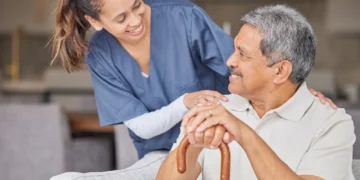
policies, funding, regulations, inspections, care homes, home‑care agencies, safeguarding teams, and national standards. It is a country where elder care is formalised, documented, and monitored.
And yet, despite all of this, occasionally hundreds of older adults experience neglect or abuse every year. And it is not always the dramatic kind but often the silent type. The kind that shows up in unwashed clothes, unanswered call bells, rushed conversations, or a lonely man pushing a trolley he shouldn’t be pushing in a super market.
Meanwhile, in rural Kenya where there are are few formal care homes, no government carers, no social‑care budgets, and no charity vans, the elders are often held by the community in a way that feels deeply human. Not perfect, not universal, but profoundly rooted in cultural values.
It raises a question that has stayed with me for years:
How can a country with so much still fail some of its elders, while a country with so little often protects them with such heart?
The answer, I’ve come to realise, lies in the difference between systems and values.
In the UK, the system is strong , but the social fabric is thin
This is because families are often scattered across cities or even countries. People work long hours. Life is fast, individualistic, and structured around personal independence. Therefore, when an older adult becomes frail, the default response is often to “hand over” care to professionals.
kindly note that Most families care deeply. Many do everything they can. But the system can unintentionally create distance a sense that “someone else” will take responsibility.
And when the system becomes overstretched, people fall through the cracks.
Meanwhile In Kenya, the system is thin but the social fabric is strong
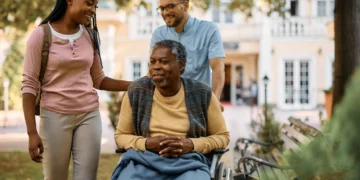
For instance In rural villages, people grow up knowing their neighbours, sharing food, raising each other’s children, and supporting each other through hardship. Elders are not seen as burdens; they are seen as part of the community’s identity.
Even without money, people give what they can:
time, presence, labour, food, companionship.
It is not charity, it their way of life, It is culture.
What These Two Worlds Teach Us
Living between these two realities has taught me something simple but profound:
**Wealth can build systems, but it cannot build compassion.
When you’ve lived and worked in two very different worlds ie the structured healthcare system of the UK and the community‑driven care of rural Kenya then one starts to see elderly care not just as a service, but as a reflection of a society’s soul.
This is because On paper, the UK has everything: That is
policies, funding, regulations, inspections, care homes, home‑care agencies, safeguarding teams, and national standards. It is a country where elder care is formalised, documented, and monitored.
And yet, despite all of this, occasionally hundreds of older adults experience neglect or abuse every year. And it is not always the dramatic kind but often the silent type. The kind that shows up in unwashed clothes, unanswered call bells, rushed conversations, or a lonely man pushing a trolley he shouldn’t be pushing in a super market.
Meanwhile, in rural Kenya where there are are few formal care homes, no government carers, no social‑care budgets, and no charity vans, the elders are often held by the community in a way that feels deeply human. Not perfect, not universal, but profoundly rooted in cultural values.
It raises a question that has stayed with me for years:
How can a country with so much still fail some of its elders, while a country with so little often protects them with such heart?
The answer, I’ve come to realise, lies in the difference between systems and values.
In the UK, the system is strong , but the social fabric is thin
This is because families are often scattered across cities or even countries. People work long hours. Life is fast, individualistic, and structured around personal independence. Therefore, when an older adult becomes frail, the default response is often to “hand over” care to professionals.
kindly note that Most families care deeply. Many do everything they can. But the system can unintentionally create distance a sense that “someone else” will take responsibility.
And when the system becomes overstretched, people fall through the cracks.
Meanwhile In Kenya, the system is thin but the social fabric is strong
For instance In rural villages, people grow up knowing their neighbours, sharing food, raising each other’s children, and supporting each other through hardship. Elders are not seen as burdens; they are seen as part of the community’s identity.
Even without money, people give what they can:
time, presence, labour, food, companionship.
It is not charity, it their way of life, It is culture.
What These Two Worlds Teach Us
Living between these two realities has taught me something simple but profound:
**Wealth can build systems, but it cannot build compassion.
No Content Available